
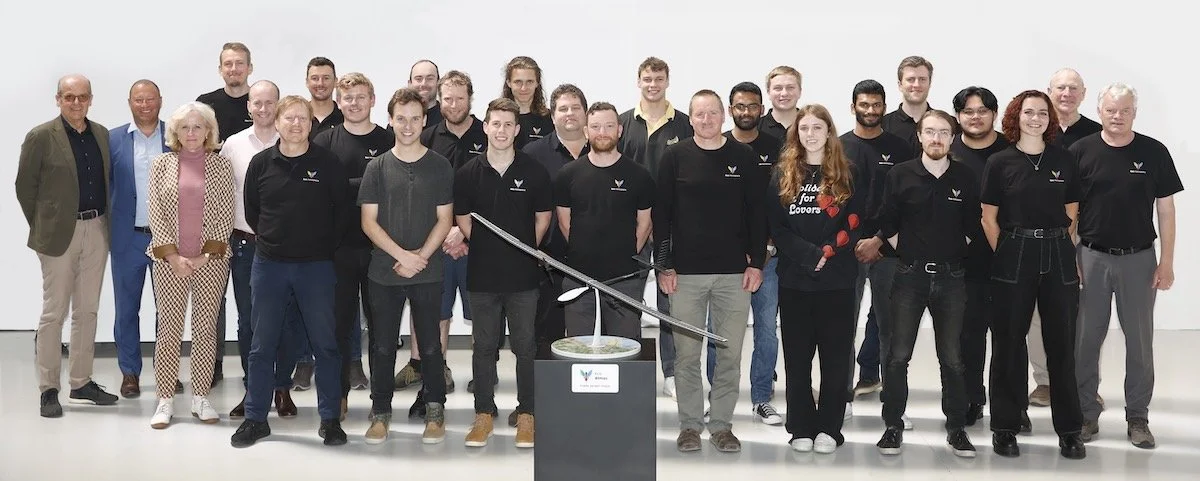
We held a short interview with Mark Rocket from Kea Aerospace to gain a snapshot view into how the company operates, and his thoughts on the aerospace industry. Read on to find out what he had to say.
1. What's the aerospace story from overseas that more people in NZ should be paying attention to right now?
The Artemis II mission was a critical validation of NASA’s Orion spacecraft systems, including life support, deep-space navigation, and high-energy re-entry profiles. It signals a clear strategic commitment by the US to sustained lunar operations. Artemis III, expected in 2027, will focus on integrating the Human Landing System with orbital rendezvous and docking in lunar orbit, while Artemis IV, expected in 2028, could land people back on the moon and will include the first woman to step on to the lunar surface.
2. What's a global trend that's going to land on NZ's doorstep in 2026 — whether we're ready or not?
We’re seeing a shift from a rules-based global order toward a more contested, power-driven environment, which is directly influencing aerospace priorities. This is accelerating investment in defence aviation, space-based ISR capabilities, and resilient communication networks such as Low Earth Orbit constellations. For New Zealand, this will likely mean increased defence activity, greater emphasis on dual-use aerospace technologies, and deeper integration with partner systems for surveillance, security, and strategic resilience.
3. What's NZ's real edge in global aerospace right now — and are we making enough of it?
New Zealand’s strength lies in its ability to execute rapid, cost-effective aerospace development within a highly favourable testing environment. Our controlled airspace, low traffic density, and access to diverse flight corridors—ranging from coastal to stratospheric—make us ideal for UAVs, high-altitude platforms, and launch operations. Combined with political stability and pragmatic regulation, we can support full lifecycle R&D. However, we’re not yet fully capitalising on this by attracting enough large-scale international programmes.
4. What are you most excited about in 2026 — for your work and for the sector?
At Kea Aerospace, we’re advancing the Kea Atmos Mk2, a solar-electric high-altitude platform designed for persistent flight in the stratosphere above 60,000 feet. This involves solving challenges around energy generation and storage, ultra-lightweight composite structures, and autonomous flight in low-density air. Our new facility supports scaled production and integration. More broadly, I’m excited by the convergence of high-altitude UAVs and satellite systems into hybrid architectures for continuous Earth observation and connectivity.
5. What's a take you have on the future of aerospace that might surprise people?
Asteroid mining has the potential to fundamentally reshape the economics of space. Accessing in-situ resources such as water ice for propellant and rare metals could dramatically reduce the need to launch mass from Earth. This enables orbital refuelling infrastructure, large-scale in-space manufacturing, and deeper exploration missions. Over time, this will support a self-sustaining space economy, unlocking new industries and making long-duration human presence beyond Earth far more viable.
We thank Mark for his insightful responses and perspectives, and can’t wait to see the part Kea Aerospace plays in the future of Aotearoa’s aerospace industry.
